OCCA’s Terrestrial Invasive Species Guide
Invasive Insects Around Otsego County
-
![]()
Asian Longhorn Beetle
The Asian long-horned beetle (ALB) threatens urban and suburban shade trees and recreational and forest resources valued at hundreds of billions of dollars. While the Asian long-horned beetle has largely been confined to urban and suburban parts of the state, this species could have significant impacts on our upstate forests should it spread further. The beetle could impact industries such as maple syrup production and hardwood lumber processing, nurseries and tourism.
-
![]()
Emerald Ash Borer
The emerald ash borer (EAB) is an invasive beetle to eastern Asia that kills all species of ash trees in North America, and has caused severe economic and ecological damage. It was first detected near Detroit in 2002, and has now spread to 28 states, the District of Columbia, and two Canadian provinces. Ash mortality is 100% near Detroit and is widespread in all the affected areas. Since the establishment of EAB in New York State we have seen economic impacts in forests where ash is a common timber species and in urban areas where ash are frequently planted as street trees.
-
![]()
Hemlock Woolly Adelgid
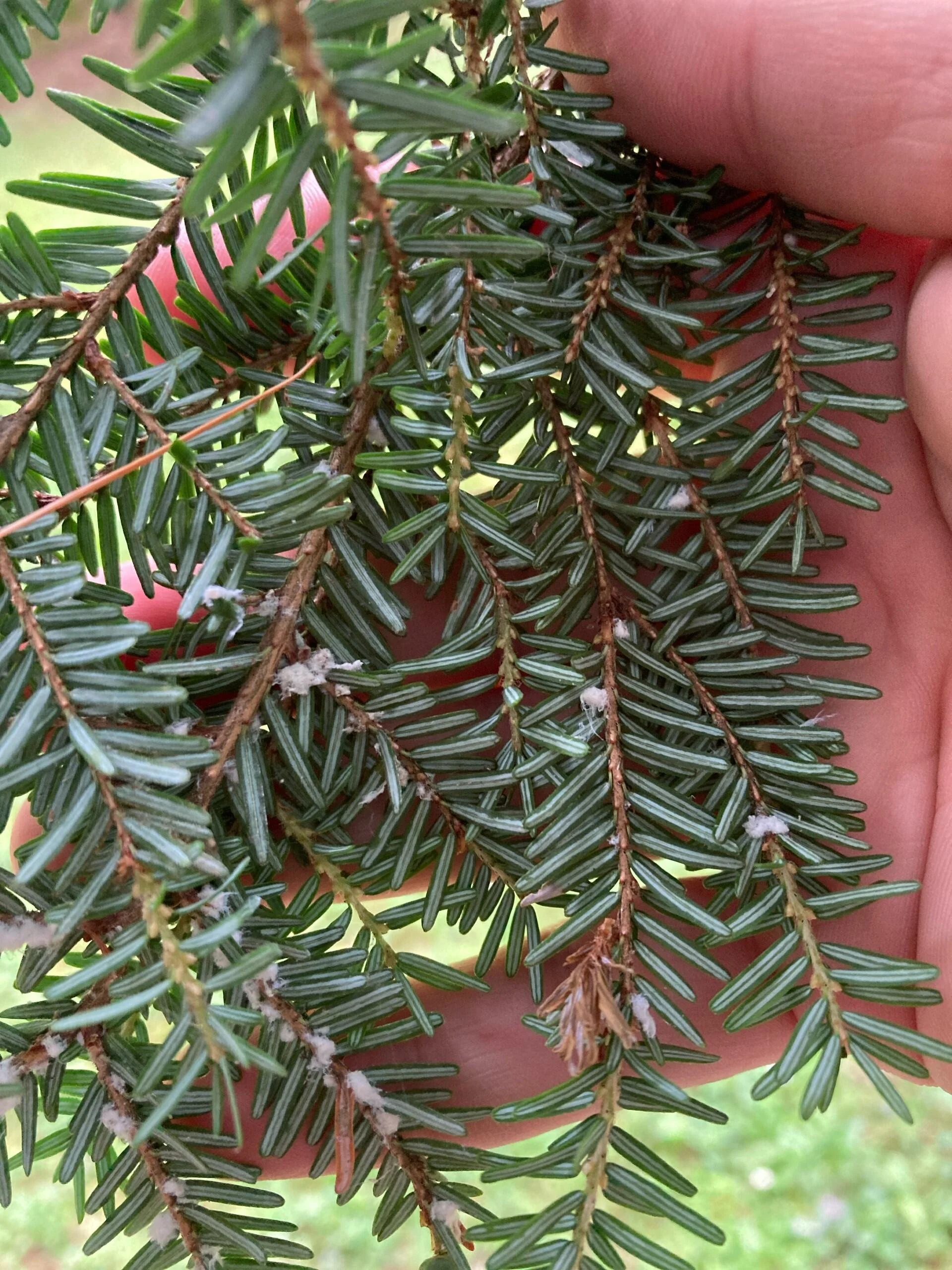
The hemlock woolly adelgid (HWA), is an exotic pest native to Asia and western North America. It was first described in western North America in 1924 and first reported in the eastern United States in 1951 near Richmond, VA. This pest is now spreading through eastern forests at an alarming rate, and has the potential to remove a major component of these forests that is important in maintaining clean water and providing valuable habitat for myriad wildlife. This pest is now found in at least 19 states, and Otsego County stands at the crossroads of the current invasion spreading north into the Adirondacks. It is currently found on only a handful of sites in Otsego County, but surveys and programs are being done to determine the extent of the invasion.
-
![]()
Spotted Lanternfly
Spotted lanternflies (SLF) are both destructive and disruptive pests. They feed on a variety of plant species, including important crops such as grapes, apples, blueberries, hops, and forest trees like maples. Their feeding behavior can weaken host plants, making them more susceptible to secondary infections and mold growth.
In addition to being destructive, SLFs can be quite disruptive. They often occupy various surfaces and may bump into or land on people while outdoors, although they do not bite or sting. While feeding, they excrete a sugary liquid called honeydew, which drips onto whatever is below them. This sticky substance attracts ants, flies, bees, and wasps and promotes mold growth. Lanternflies are fast but somewhat clumsy when flying and hopping, which can interrupt outdoor activities.
Native to eastern Asia, the spotted lanternfly was first discovered in the United States in southeastern Pennsylvania in 2014 and has since spread rapidly. They easily hitchhike on vehicles and will lay their eggs on almost any surface from late summer through fall. If you are in an area known for spotted lanternflies, be sure to inspect your vehicle thoroughly before heading home and consider taking it to a car wash.
-
![]()
Asian Jumping Worm
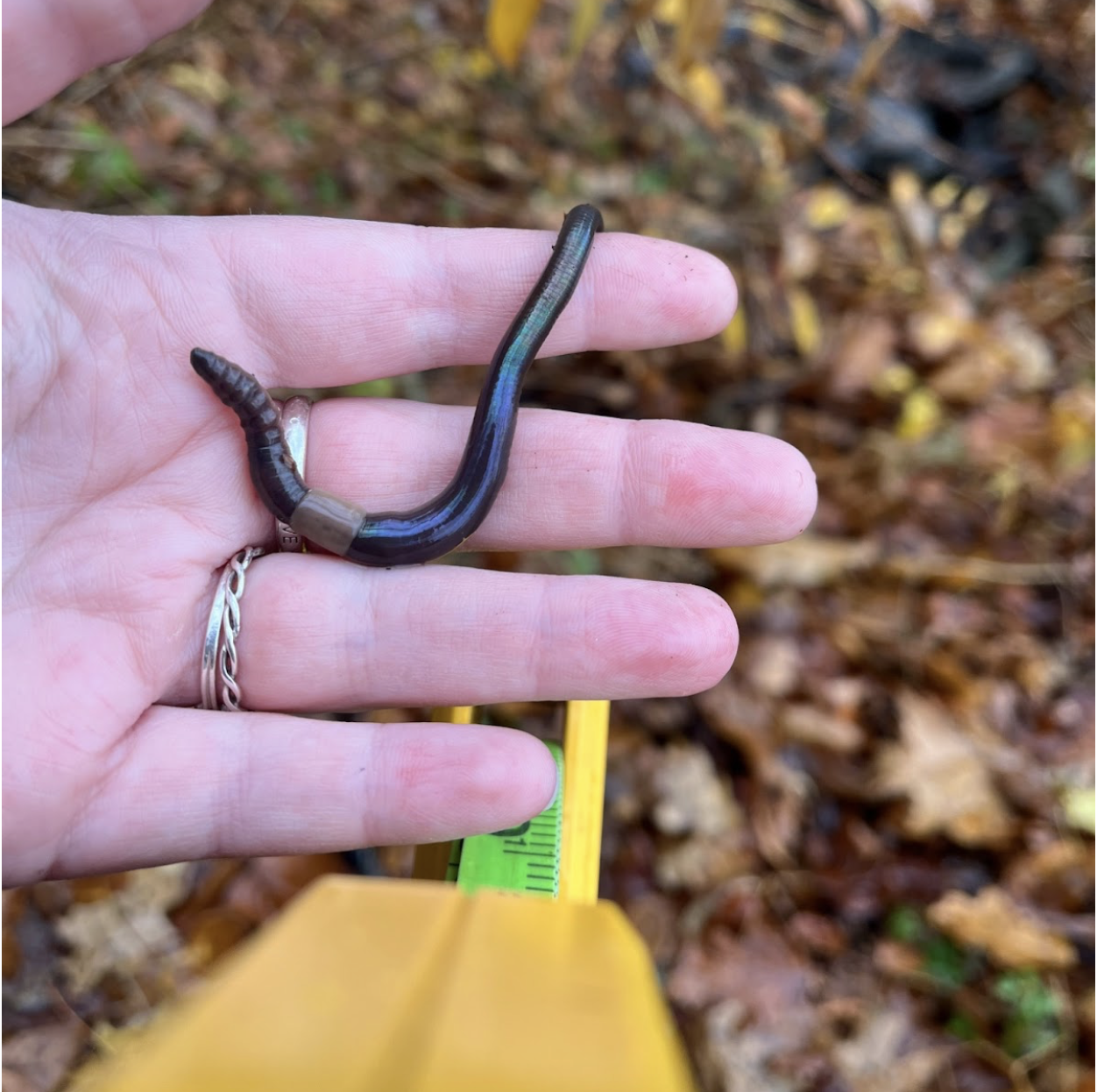
The Asian jumping worm (Amynthas agrestis) is an invasive species of earthworm which is native to East-Central Asia. Introduced to North America in the late-1800s, they have since spread throughout the Northeast and Midwest, spreading primarily through horticultural trade. In North America, they can be found in gardens, lawns, and wooded areas living in the leaf or mulch layer of the soil. Adult and developing jumping worms survive in wet, frost-free soil, but eggs encased in cocoons are tolerant to freezing temperatures and drought. Invasive jumping worms are smooth and glossy with a slight iridescent hue. When disturbed, they thrash wildly back and forth, and can break off tail segments to escape. They can be distinguished from other earthworms by their characteristic clitellum, which is cloudy-white to gray in color and flush with their skin. These worms outcompete other earthworms and their castings quickly degrade soil quality. Soil invaded by jumping worms has a coffee ground texture which makes it inhospitable to many native plant species and highly susceptible to erosion. Jumping worms quickly consume the top layer of organic material, making it difficult for plants to remain rooted and allowing nutrients to be washed away by rain.
ManagementPreventing the introduction of Asian jumping worms is the most effective method of control. They are primarily introduced through horticulture, so it is important to avoid buying mulch, compost, nursery stocks, or potting mixes from areas with established jumping worm infestations. Once established in a garden, worms can quickly spread to surrounding natural areas. Jumping worms may also be introduced as baitworms, so anglers should avoid buying baitworms advertised as “snake worms,” “Alabama jumpers,” or “crazy worms.” If baitworms are used, it is vital to follow all proper procedures, euthanize worms before disposal, and never dispose of unused live worms into the environment.



Invasive Plants Around Otsego County
-
![]()
Japanese Knotweed
Japanese Knotweed is not just any plant. It's a true survivor, thriving in conditions that would challenge most other plants, such as disturbed areas, roadsides, and even shaded, high-salinity, high-temperature, and drought-prone environments. This adaptability is what makes Japanese Knotweed such a formidable invader, demanding our attention for its management.
The primary objective in controlling Japanese knotweed is eliminating the rhizome system. Rhizomes are creeping underground stems that give rise to new shoots and roots. Small stands may be killed by repeated cutting, but this treatment must be repeated six times or more per season for many years. Pulling up the plants increases the risk of spreading knotweed because small pieces of root left in the soil can start a new colony. Another strategy is to smother the plants with heavy plastic or other material heavy enough to prevent the plants from growing through.
-
![]()
Garlic Mustard
Garlic mustard, originally from Europe and Asia, was introduced to North America in the mid-1800s for its herbal and medicinal qualities.
Garlic Mustard is a biannual with a two-year life cycle; one plant can produce more than 7,000 seeds before dying. It emerges before most native plants and gains a foothold in early spring. By the time native species are ready to grow, garlic mustard has blocked their sunlight and outcompeted them for moisture and vital nutrients.
Your role in removing garlic mustard is crucial. The ultimate goal is to prevent seed development and spread. The best way to achieve this is by manually pulling the whole plant. After you have pulled the plants, bag them up and throw them out with your garbage; do not compost.
-
![]()
Wild Parsnip
Wild parsnip resembles cultivated parsnip and belongs to the Apiaceae family. It likely escaped from gardens. The plant has yellow flowers that bloom in clusters from June to mid-July. After seeding, it dies but leaves a stalk that remains through winter. Its seeds can last in the soil for up to four years.
This invasive plant thrives in disturbed areas, especially along field and meadow edges. Once established, it spreads quickly.
While the roots are edible, the leaves, stems, and flowers contain a chemical that can cause a severe skin reaction when exposed to sunlight. This reaction, called phytophotodermatitis, can cause burning, rashes, blistering, and skin discoloration lasting up to two years. If you contact wild parsnip sap, cover the area and wash it with warm water and mild soap immediately. The skin will be sensitive for about eight hours.
To control small infestations, remove plants manually. Cut the root one inch below the ground or pull them up before they seed. If they have seeded, collect and destroy the seeds. For small areas, cut the tops and bag them in clear plastic to decompose.
-
![]()
Honeysuckle
Lonicera morrowii, Lonicera tatarica, and Lonicera maackii are similar-looking shrubs that grow between 6 and 15 feet tall. Lonicera japonica, however, is a woody vine that can reach 30 feet. All these species have egg-shaped leaves that grow opposite each other on hollow stems. Invasive honeysuckles flower from May to June, producing fragrant tubular flowers which can be creamy white, crimson, or various shades in between. L. morrowii and L. tatarica produce small red berries from mid-summer to early fall. L. maackii has dark red berries that ripen in late fall, while L. japonica produces dark purple or black berries in the fall.
In New York, you can find both invasive and native honeysuckles. To tell them apart, look at the stems: invasive species have hollow stems, while native species have solid stems.
These invasive honeysuckles can harm natural areas. They grow in dense thickets, leaf out early, and stay green longer than most other shrubs. This blocks sunlight, moisture, and nutrients from reaching other plants. Birds eat the fruits and spread the seeds to new locations.
If you find small plants early enough, you can pull them out by hand. In open spaces, prescribed burns can help control their growth. It's best to remove these plants before they produce berries in late summer or early fall to stop the spread of seeds.
-
![Photo of Mile a Minute, an invasive plant]()
Mile-a-Minute
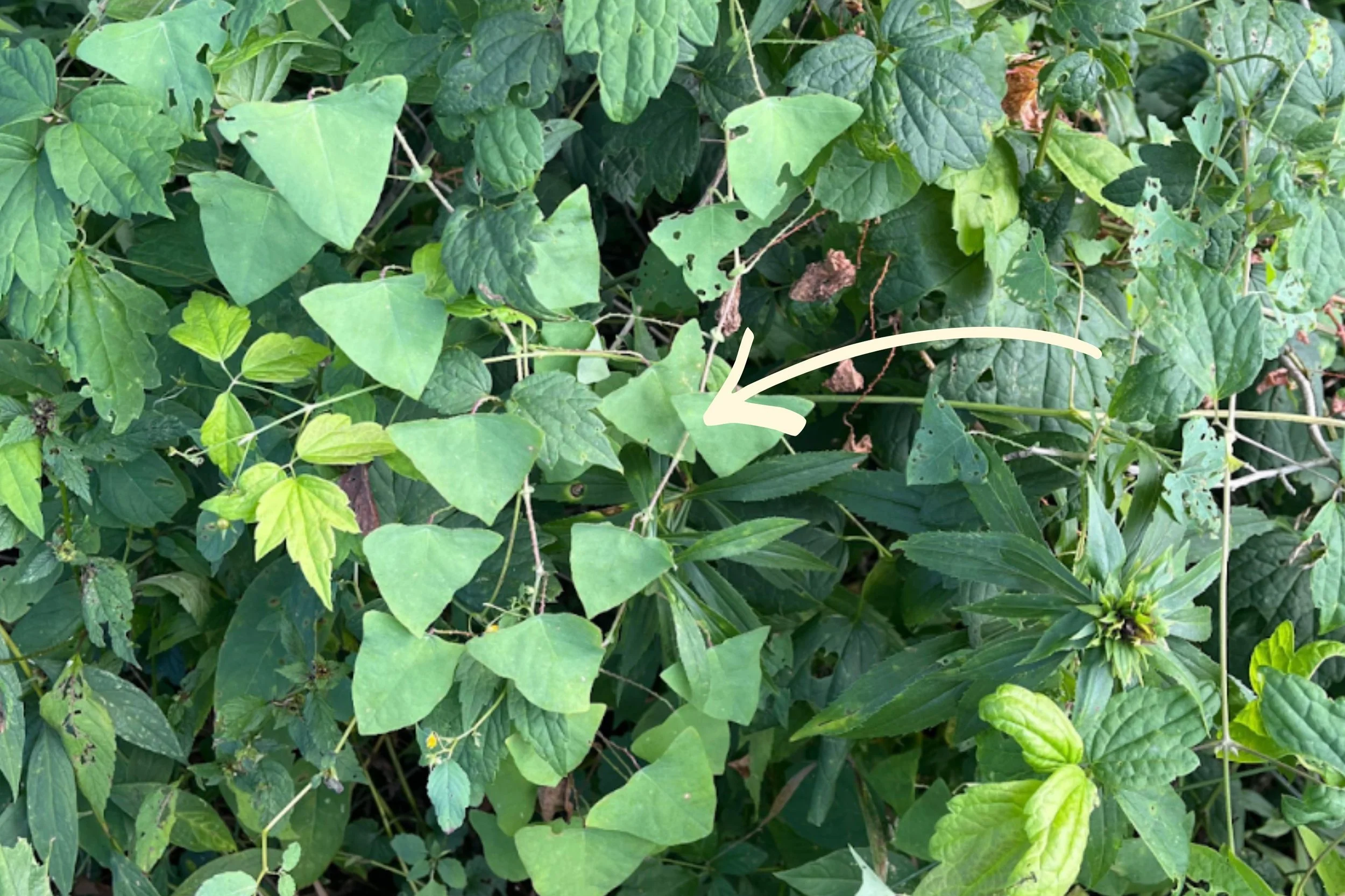
Mile-a-minute weed (Persicaria perfoliata) is a highly invasive, fast-growing vine with sharp, barbed stems, triangular leaves, and distinctive blue fruits. Originating from India and East Asia, mile-a-minute was first reported in York County, Pennsylvania in the 1930s in contaminated nursery soil. It is estimated that mile-a-minute currently grows in about 20% of its potential U.S. range and could expand to cooler areas, as the seeds only require a two-month cold period to flower. It is named for its rapid growth (up to 6 inches/day), which allows it to smother native plants by forming dense, suffocating mats. It is considered a threat to native vegetation, nurseries, reforestation areas, young forest stands, and industries such as Christmas tree farms. Its seeds are spread via water, animals, and contaminated equipment, with seeds surviving for years, making control challenging.
ManagementManagement of mile-a-minute can depend on the severity of the infestation and the conditions of the specific site. Hand-pulling of vines can be effective, but caution must be exercised when removing vines with fruits. Proper disposal of the plant includes drying, burning, or bagging and bringing to a landfill. Small populations of mile-a-minute can be eliminated through repeated pulling, mowing, or cutting. There is also a biological control for this species, called the mile-a-minute weevil, a small black weevil that selectively feeds on mile-a-minute. Once the infestation has been removed, ongoing monitoring and management is necessary for up to 6 years to ensure that no seeds remain in the soil.